

Ngorongoro National Park is one of Africa’s most iconic safari destinations, renowned for its breathtaking landscapes, incredible wildlife diversity, and the world-famous Ngorongoro Crater. The park was formed millions of years ago when a massive volcanic eruption caused the collapse of a supervolcano, creating a vast caldera surrounded by steep crater walls. This unique geological formation, coupled with fertile soils and abundant water sources, has made Ngorongoro a haven for wildlife, offering visitors an unparalleled opportunity to experience the richness of Tanzania’s natural heritage.
Located approximately 180 km west of Arusha, Ngorongoro National Park is part of the Crater Highlands and is a key stop on Tanzania’s northern safari circuit, which includes Lake Manyara, Tarangire, Serengeti, and Mount Kilimanjaro. The park is a UNESCO World Heritage Site, protecting a vast ecosystem where elephants, lions, leopards, buffaloes, zebras, and wildebeest coexist alongside thousands of other species. The combination of its geological history, ecological diversity, and breathtaking scenery makes Ngorongoro a must-visit destination for travelers seeking both adventure and tranquility.
The park is also culturally significant, as the Maasai people have lived in the highlands for centuries, maintaining their traditional way of life alongside the wildlife. Visitors to Ngorongoro can enjoy the rare experience of observing wildlife in a setting where humans and nature coexist, adding depth and cultural context to the safari experience.
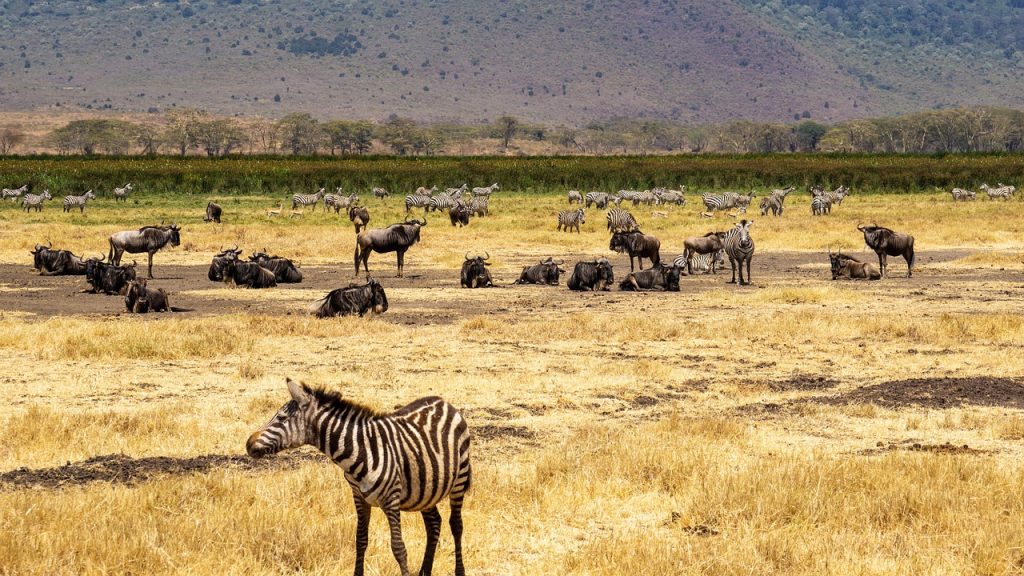
Wildlife and Nature Highlights
Ngorongoro National Park is home to over 25,000 large animals, concentrated within the crater and surrounding highlands. Its unique combination of grasslands, forests, swamps, lakes, and savannahs creates the ideal habitat for both herbivores and predators. Some of the most notable species include:
The Big Five: Lions, leopards, elephants, buffaloes, and rhinoceroses.
Other Mammals: Zebras, wildebeest, hippos, gazelles, hyenas, jackals, warthogs, and waterbucks.
Birdlife: Seasonal and resident birds, including flamingos at Lake Magadi, herons, storks, pelicans, and over 500 recorded species.
The crater floor is especially famous for its high concentration of wildlife, where visitors can witness dramatic predator-prey interactions. Early morning and late afternoon are prime times for safari photography, as animals are most active during these cooler hours.
Top Attractions in Ngorongoro National Park
1. The Ngorongoro Crater
The main attraction is the crater itself — a staggering 20 km wide and over 600 meters deep — often described as one of the natural wonders of Africa. Its rim offers panoramic views over a diverse landscape filled with lakes, rivers, and wildlife.
2. Lake Magadi
This seasonal soda lake is a haven for migratory flamingos and a variety of waterbirds. During the wet season, its shores become a spectacular pink and white canvas of birds, ideal for photography and birdwatching.
3. Ngoitoktok Springs and Swamps
The park’s freshwater springs and swamps attract hippos, elephants, and a variety of antelopes. These tranquil areas provide scenic picnic spots and excellent wildlife observation points.
4. Cultural Experiences with the Maasai
Visitors can also explore Maasai villages along the crater rim to learn about traditional lifestyles, cattle herding practices, and local crafts — adding a rich cultural dimension to the safari experience.
Activities in Ngorongoro National Park
Game Drives: Explore the crater floor and highlands with guided safari tours.
Bird Watching: Spot hundreds of bird species, including flamingos, pelicans, and eagles.
Photography Safaris: Capture lions, elephants, hippos, and the stunning crater landscapes.
Guided Nature Walks: Learn about the park’s flora, geology, and ecosystems with an expert guide.
Cultural Tours: Visit Maasai communities for authentic experiences and local storytelling.
Best Time to Visit
Ngorongoro can be visited year-round, but conditions vary depending on the season:
Dry Season (July–October): The best time for large game viewing as animals gather around shrinking water sources. Roads are more accessible, and wildlife is easier to spot.
Wet Season (November–May): The park is lush and green, attracting migratory birds and creating spectacular scenery for photography. Roads may be muddy, but fewer tourists ensure a more peaceful experience.
Where to Stay and How to Access
Ngorongoro National Park is easily accessed from Arusha via a 3–4 hour drive or via small charter flights to nearby airstrips. Accommodation options range from luxury lodges and boutique hotels to budget campsites, many of which are located along the crater rim or just outside the park. Staying at a rim lodge provides breathtaking sunrise and sunset views over the crater, as well as convenient access for early morning game drives.
Final Thoughts
Ngorongoro National Park is a once-in-a-lifetime safari destination, combining geological wonder, extraordinary wildlife diversity, and rich cultural heritage. From witnessing lions stalking prey on the crater floor to photographing flamingos at Lake Magadi or enjoying a peaceful Maasai village visit, every moment in Ngorongoro is unforgettable. Its accessibility, variety of wildlife, and stunning landscapes make it a must-visit highlight of any Tanzanian safari adventure.