

Nyungwe — A Primeval Rainforest, Nature’s Masterpiece
Nyungwe Forest National Park lies in southwestern Rwanda. This vast and beautiful rainforest was officially declared a national park in 2004, marking a key expansion of Rwanda’s protected natural areas.
The forest covers roughly 1,019 km² of dense montane rainforest, wetlands, bamboo slopes, swamps, and high-altitude terrain — making it one of the largest blocks of intact montane forest in East/Central Africa.
Walking under the towering old mahoganies, giant tree ferns, and thick canopy trees, you’ll often find orchids, epiphytes, and a rich undergrowth of ferns and mosses. Bright birds flit overhead, butterflies drift through the air, and a symphony of forest sounds envelopes you. The forest feels almost magical — as though you’ve stepped into an ancient natural world untouched by time.
Biodiversity & Wildlife — A True Wildlife Hotspot
Nyungwe Forest is famous for its astonishing biodiversity. Among its many inhabitants:
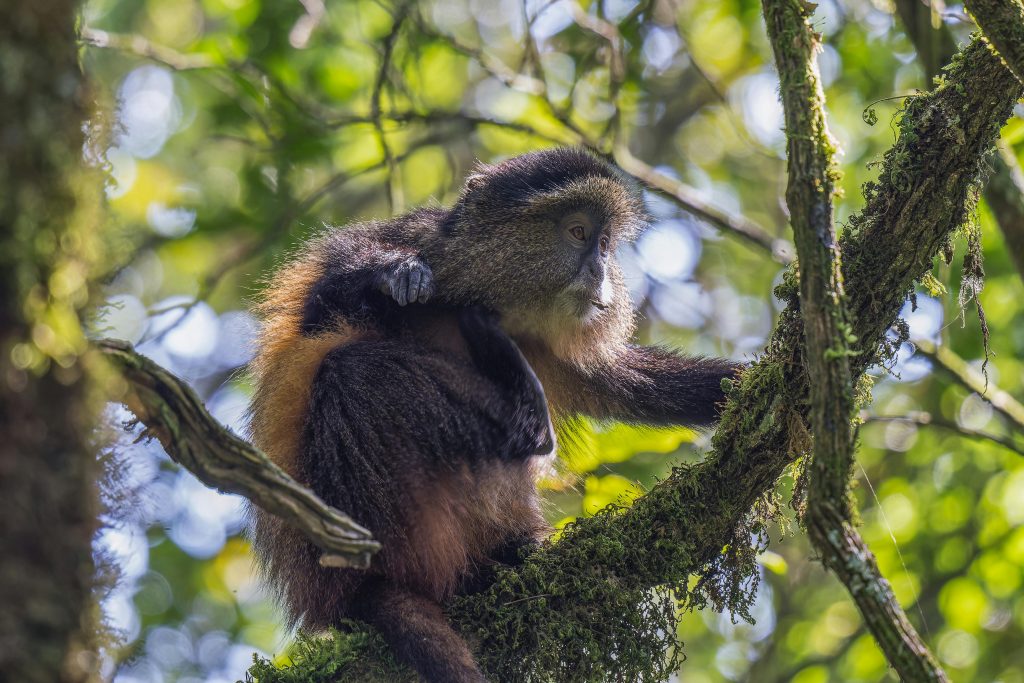
Primates: The park is home to 13 different primate species — a major draw for wildlife lovers. Among them are chimpanzees, colobus monkeys, and other species that thrive in this forest environment.
Birds: With over 300 bird species recorded, including many endemic to the region, the forest is a paradise for birdwatchers. Expect beautiful and rare birds making their home in the canopy and forest edges.
Other wildlife and flora: In addition to primates and birds, the forest hosts a variety of mammals, reptiles, amphibians, butterflies, orchids, giant forest trees, and a vibrant plant community that thrives in the montane rainforest conditions.
This combination of species — from towering trees to shy forest mammals and delicate orchids — makes Nyungwe one of Africa’s most ecologically significant and biologically rich protected areas.
What You Can Do in Nyungwe — Activities & Experiences
If you visit Nyungwe, some of the best experiences and activities include:
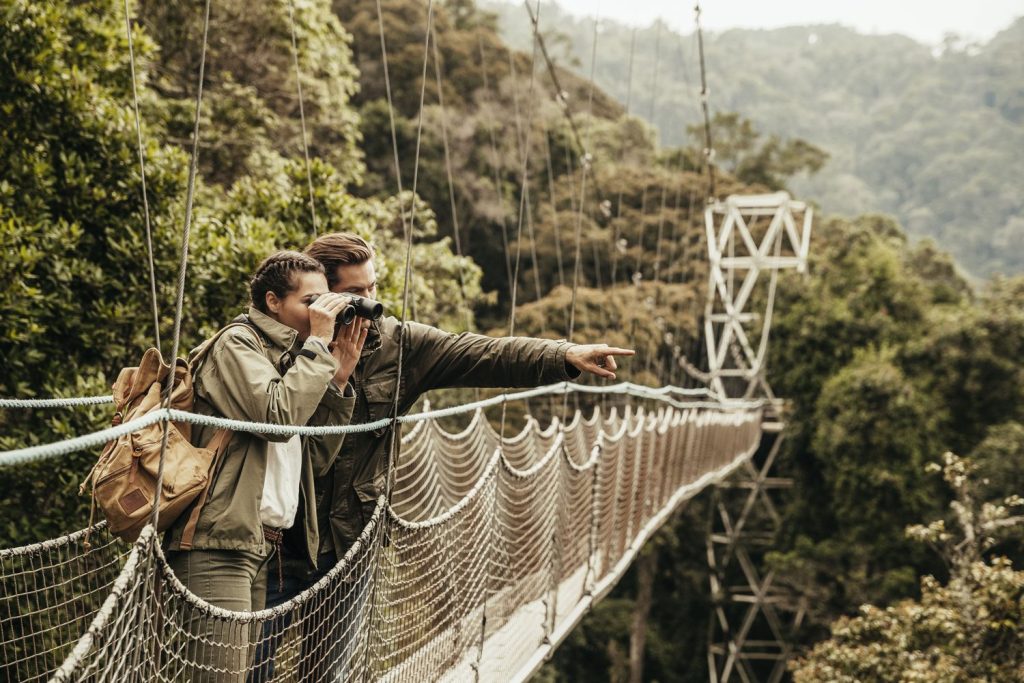
Canopy Walk: One of Africa’s highest and most dramatic canopy walks — a metal bridge suspended high above the forest floor, offering panoramic views over the dense rainforest and allowing you to glimpse wildlife from a treetop perspective.
Primate Treks: Trekking through the forest to look for chimpanzees and other primates — a chance to observe them in their natural habitat. Early mornings are often the best time to start these treks.
Hiking & Forest Trails: Over 130 km of hiking trails available, ranging from short walks to full‑day hikes, that traverse diverse terrain — from dense forest to swampy wetlands, bamboo slopes, and scenic viewpoints.
Birdwatching & Nature Observation: Ideal for bird lovers, photographers, botanists, or anyone who enjoys observing wildlife — from birds and butterflies to forest mammals and plant life.
Eco‑tourism & Relaxing Retreat: For those wanting a tranquil escape, the forest offers lush landscapes, serene nature, and a rare chance to immerse yourself in a rich natural environment.
 Significance & Why Nyungwe Matters
Nyungwe Forest National Park isn’t just a pretty forest — it’s a vital ecological refuge:
It represents one of the best‑preserved montane rainforests in Africa, protecting an immense variety of species and ecosystems. (Wikipedia)
The forest plays a critical role in conservation, safeguarding primates, birds, plants, and rare species — many of which are endemic or unique to this region. (African Parks)
For travelers, it provides a completely different safari experience from savannah or mountain treks: dense rainforest instead of open plains, primates and birds instead of big game — offering a deeply immersive, nature‑centred journey.
Nyungwe stands out as a destination for ecotourism, research, conservation awareness, and for anyone wanting to experience Africa’s rainforest magic.