

Lake Kivu Is One Of The African Great Lakes, Situated On The Border Between Rwanda And The Democratic Republic Of Congo. Its Name Simply Means “Lake.”
Lake Kivu is one of the most captivating natural treasures in Central and East Africa. Positioned within the dramatic landscapes of the Albertine Rift, it marks a vast and scenic boundary between Rwanda and the Democratic Republic of Congo. Around 58% of the lake lies on the Congolese side, while the rest stretches across Rwanda, giving both countries access to its astonishing beauty and abundant resources. The shoreline is highly irregular, creating hidden coves, gentle bays, lush peninsulas, and multiple waterfalls that spill from surrounding highlands into the lake.
Majestic mountains frame the lake from nearly every angle, particularly in the northern and western regions where several peaks rise above 2,800 meters. Dense vegetation clings to the slopes, offering breathtaking views and creating a sense of untouched wilderness. On the western side, Lake Kivu borders the iconic Kahuzi-Biega National Park, a UNESCO World Heritage Site known for its rare Eastern Lowland Gorillas and dense rainforests.
One of the most fascinating aspects of Lake Kivu is its geological setting. The lake sits within a slowly widening rift valley caused by tectonic activity. Over thousands of years, volcanic processes have shaped the landscape and contributed to the lake’s remarkable depth of about 480 meters, making it one of the deepest lakes in Africa. Beneath the surface, underground springs feed the lake with water infused with natural gases such as carbon dioxide, a geological feature that makes Lake Kivu scientifically unique.
Within the lake lies Idjwi Island, the world’s tenth-largest inland island. This peaceful island is home to traditional fishing communities, rolling hills, banana groves, and vibrant cultural traditions. The lake’s main outflow is the Ruzizi River, which carries its waters southward toward Lake Tanganyika, linking these major African lakes through a continuous water system.
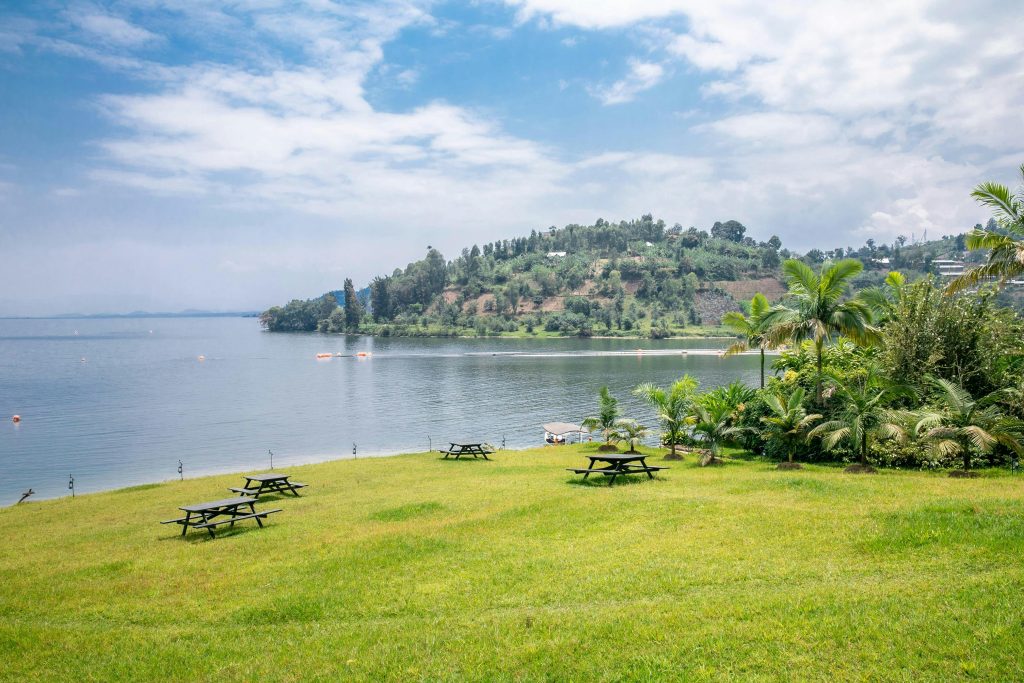 The shores of Lake Kivu are densely populated and culturally vibrant. Major towns along the lake include Goma, Bukavu, Kabare, and Sake in the Democratic Republic of Congo, as well as Gisenyi, Kibuye, and Cyangugu in Rwanda. Each town has its own character, from Gisenyi’s sandy beaches and lively nightlife to Kibuye’s peaceful hillsides and postcard-worthy sunsets.
Lake Kivu is widely considered Rwanda’s most scenic lake and one of its most relaxing destinations. Many travelers compare it to coastal areas like Kenya’s Indian Ocean shoreline or the tropical beaches of Zanzibar — but with a distinctly calm, freshwater charm. For locals, expats, and tourists, Lake Kivu offers a serene escape from busy cities and wildlife-filled savannahs.
One of the lake’s most appealing features is that it is safe for swimming. Unlike many African lakes, Lake Kivu has no dangerous crocodiles, no hippos, and no bilharzia, making it perfect for leisurely dips, kayaking, and beach activities. Visitors often finish their Rwanda safaris here, using the peaceful setting as a place to unwind after trekking gorillas or exploring national parks.
Beyond relaxation, Lake Kivu offers many activities. Travelers can take nature walks along the lakeshore, enjoy birdwatching on land or from a boat, explore secluded islands, visit natural hot springs, or take canoe excursions at sunrise. Adventure seekers can try water sports, while cultural visitors can tour nearby villages to learn about traditional fishing and agriculture.
Accommodation around Lake Kivu ranges from budget guesthouses to luxurious lodges perched on cliffs with sweeping views of the water. Whether someone is looking for an affordable stay or an exclusive retreat, the lake provides options for all travel styles.
Including Lake Kivu in any Rwanda safari itinerary adds both relaxation and scenic charm. Its peaceful ambiance, beautiful views, friendly lakeside communities, and variety of activities make it a destination that travelers remember long after leaving. It is a place to slow down, reconnect with nature, and enjoy the timeless beauty of one of Africa’s most remarkable lakes.